
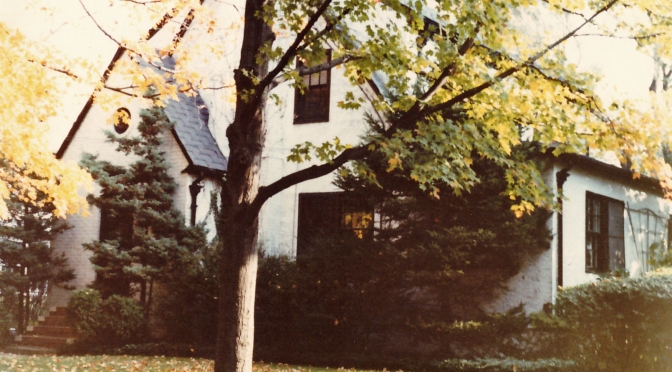
 The following excerpt is from my book, The Myth of the Yellow Kitchen.
It was the day before I would never own the house again. The next day was the closing. I came to broom-sweep the house, to sweep away the dirt and dust left by the movers two days earlier, the dirt that was in corners, under heavy furniture, the dust caught in moldings. We lived in that house for twenty-five years. Perhaps I really came to sweep away my sadness, to sweep away my ambivalence.
Should I have sold? Did I make a terrible mistake? All the furniture was gone; all the concrete reminders of our lives there were gone. I thought about all the people who were part of that house, my parents, my family, my brothers and sister, my former husband, my friends, the women who cared for my children while I studied and worked, my children, the man in my life, and me.
What makes a house a home? What nurtures the soul? Is it the physical space? Is it the surrounding area—the nature, woods, or water views? Or is it the people who lived in that home and the relationships which evolved over years? Is it the activities that took place, the children’s birthday parties, the holiday dinners—Thanksgiving, the Passover Seders, eating ice-cream around the dining room table when everyone should be in bed? And what about the material things—my mother’s dining room table, my grandmother’s candlesticks, the second-hand bureau, and the new lamp that I loved. On the first floor, there were the living and dining rooms, a small bedroom, even smaller den, kitchen, and bathroom. On the second floor, there were three bedrooms and one bath. The basement was for laundry, play, and storage. Only the kitchen had been remodeled.
In my eyes, the house was beautiful even though I knew it was dingy. I never had enough money to fix everything that needed repair or painting. But now the children were grown and gone. What did I need it for? It was time for a change.
As I looked around that day, I thought about the past; twenty-five years of living, of loving, of crying, my three children growing up here, leaving home, creating their own lives. This was the place where I grew from dependent wife to emancipated woman, from homemaker to professional, where I became an adult whose sexuality and intelligence finally found release.
What did it mean to sweep these floors, to see the dust and the rust on the floors in the den where my file cabinets stood? This room was my office, the birthplace of my professional life. Here I struggled over my dissertation, writing, rewriting, and typing over and over again in the early hours while the children still slept. This room was also the life of the bills. They were always shuffled, this month, next month, which ones to pay, which could be paid next month. There was no end to the life of the bills.
The funny thing about sweeping the house was that, as usual, I didn’t have the right equipment. We never had the right equipment, we never had the right tools, we never had the right lawn mower, but somehow it all stuck together. The broom was too large and the dustpan too small and some of the dirt I swept under the radiator.
Saying Good-bye
Basements are strange and funny places. They are a collection of the potpourri of one’s life. Most of the time you could hardly get past the boxes, the old furniture and children’s toys. And now the basement was empty, it didn’t have anything in it except the washer, dryer, and two boxes of logs for the fireplace.
I remembered all my worries about the boiler. Is it working? Is there enough heat? Is it making too much noise? The boiler was a key responsibility in my new role as head of the household. My ex-husband laid the tiles in the basement, the tiles that my children could ride their bicycles on. That was in the early days of living in that house, the days of promise, of laying new floors, painting the kitchen, and planting shrubs.
Our living room was always such a wonderful place. Everyone said it was warm and cozy. It wasn’t fashionable or chic. It was a room for living, a place where you put your feet on the big red couch, where children, relatives, my friends, their friends all gathered together in front of the fire.
There were all these boys, languishing on the couch, waiting for Marian or Beth. Here Stephen and his friend Michael demonstrated their wrestling prowess as Beth and I huddled on top of the sofa, embracing each other for safety, listening to their grunts as they ferociously nailed each other to the floor. They were both on the high school wrestling team.
And the bookshelves in the living room—how I loved the bookshelves! The shelves that I finally put in the living room on the far walls, two walls covered plus the doorway. I could spread my books out, books of all kinds, paperbacks and workbooks, novels, biographies and autobiographies. We had books in every room of the house.
When real estate agents brought in people to see the house, I could hear them talking about having to remodel the kitchen. I thought the kitchen was perfect. Charly, my ex-husband, designed the kitchen and for us, it was absolutely wonderful—all the cabinets, the wood block for chopping, the easy access to the stove and refrigerator. My children learned to cook in that space, barbecue sauce, and spaghetti, and Lindy-like cheesecake. Why would anyone remodel such a splendid kitchen?
My favorite room was the dining room. This room held my mother’s dining room table with all the wonders of the Passover feasts, Thanksgiving dinners, and eating ice cream, lots of ice cream. The legacy of feasting and families going from one generation to the next is an image that cannot ever be erased. Now my daughter, Marian, has that table and we feast in her home with her family, her husband, and two sons.
The dining room also held my mother’s old, scratched and massive buffet. Why did I cry when the Salvation Army came and took it away? In that buffet were liquor and children’s pictures—a whole drawer of children’s pictures and children’s letters and report cards. My dissertation data took up another whole drawer—the original monographs, graphs, and tables—I threw all that away when I moved.
———-
Walking up the stairs, I remembered how we would leave the folded laundry at the foot of the stairs to avoid an extra trip. There was always something on the first step waiting to be carried up. How many times had I climbed those stairs to go to bed, to get dressed, to attend to a child?
On the second floor, my bedroom was the largest. I slept there almost every night for the last twenty-five years. I could hear the squirrels pattering on the roof outside and see the large tree from the bedroom window the first thing in the morning. I thought about the life of that room, the mystery and magic and tears of the nights in that room.
This bedroom also held memories of love and lovemaking, of newborn Beth sleeping in the crib next to the double bed, of both of us getting up to feed her, enraptured with each other and our new daughter. This was the place where children, waking up in the middle of the night with a bad dream, would snuggle in for comfort. It was in this room, in the middle of those long, sleepless nights, that I realized I had to rebuild my life and take care of my children.
The second bedroom, the one next to mine, had its own history. How many lives have lived in that room? Marian and Stephen slept there, then Marian and Beth slept there, then Marian slept there, then Beth and her dog, Ralph, slept there. Then Gloria slept there, my friend who lived with me for a year after all the children had gone. In two large bookcases, Richard, my former lover, stored a lifetime of his love of books when he came to live with me.
Walking through the house, I wept for all that had been and all that might have been, for the dreams one has and the fantasies about what life could be. And then for all the surprises, for some of them were very good.
Final Moments
I loved that house. I knew its creaks; I knew the sound of the boiler. I could tell when the washing machine wasn’t working just by the sound. I remember the bell, its strong resonant persistence, and the reassurance of the radiator noises on those long, cold nights. A house is like a person. Over time, you learn its strengths, its vulnerabilities, where to go easy, where to press hard. You know what to fix, what to leave alone, what not to impose on, what to use to its fullest.
In that house, there was so much unfinished business, unresolved feelings, former angers, uncut lawn, a dilapidated garage. I always feared that I had left something on when I went out, like the coffee pot, or the electric blanket. Or maybe the furnace wasn’t working correctly. There was always so much to do, so much to fix, to accomplish, to resolve with the children. Bills needed to be paid, articles had to be written, old lovers buried, and childhood fears extinguished.
The house symbolized the divorce, the various life styles, the friendships, the women, the men, the values, the breaking up, and the growing up. It also represented the fears, the exhilaration, the weeping, the laughter, and the insomnia. How many nights I had insomnia in that house! The house was my past, my growing up, my children growing up. It was the metaphor for family, for love, for identity, the place where I began and fulfilled a career. It was the place where my identity as a woman, as a mother, as a human being was formed.
The house helped us struggle with the trauma of divorce, helped us feel anchored, helped me feel sheltered. Whenever my children came home, almost twenty years later, they still drove past “our house” to see what is the same, what is different, to show their own children where they were born and where they grew up.
Does our love of the house represent the lost dream, the dream of marriage and living happily ever after, the tight-knit family? Was the dream real or illusory? Does one long forever for what might have been? The irony is that the dream stifled my becoming; the smashing of the dream brought confidence. And neither the dream nor the shelter of the house protected me from pain, loneliness, or feelings of betrayal.
We loved the house, and the house loved us. Look what the house gave us: I never wrote one single poem before I sold that house, before I stood in that kitchen, in that living room, and those bedrooms and thought about the meaning of the house, the
love and vitality of that house. It gave each of us a connection, a connection to it and to each other.
That house gave us its strengths, its imperfections, its cracks, and its warmth. It let us grow up and not be pretentious, helped us learn both simplicity and complexity. The house loved us so much it gave us the strength, the wisdom, and the time to live on and on no longer in it.
Sweeping Up
I came to broom sweep my big old house today
Before the closing which will happen soon
I cry when I see where my children did play
Its time to clean for the closings at noon.
The floors in the den are covered with dust
Why is it so hard to sweep clean this room?
The file cabinets now decayed with rust
We never had the right hammer or broom.
The house kept us bonded, committed through time
But the price is right and it’s time to go
I’ll get an apartment, it will be fine.
We have new lives to live, new seeds to sow.
All of us young, we were finding our way
The road is new and I’ll try not to cry.
The road isn’t easy and it’s hard to say
How painful it will be to say goodbye.
Now I must learn how to conquer my fear
We loved this old house and my heart is here.
 Rhoada Wald