Birthdays, Bar Mitzvahs, and Bat Mitzvahs stand out across time, each reflecting life as it was then, feeling so permanent in the moment yet always changing. The shifts that blurred across the days, weeks, and years now look so clear in retrospect.
As I recall them here, they tumble one into the other, each representing their own sort of joy even in the midst of heartache.
The first birthday party I remember I was six years old. My father was making a 30th birthday party for my mother; he was thirty-two. I remember thinking how old they were. My parents had a terrible marriage but I would like to believe that, at least once, she was grateful and happy and expressed those feelings to my father, who was always trying to please her. Eventually, of course, he stopped trying to please and just left.
The next birthday I remember was my brother Marvin’s. It was his Bar Mitzvah. At thirteen, he was already grown, tall, handsome, and already shaving. He had those good-looking Hollywood playboy looks. The ritual and the party afterwards were symbols of the culture we were part of rather than any deep religious significance. Marvin was a boy, their first boy, and something to be joyous about. I was five and my sister four when Marvin was born, and I still remember my father calling everyone and shouting, “It’s a boy, it’s a boy. Finally, we have a boy.”
Only girls attended my sweet sixteen birthday party. I sometimes get it confused with my bridal shower; one of them was at Tavern on the Green in New York. I was chubby then and not very joyful about anything. I was anything but sweet, good, yes, but definitely not sweet.
And then there were all the yearly parties for my children, Marian, Stephen and Beth. There were those endless parties in the living room. Once I hired a teenage clown. There were story telling parties and scavenger hunts. We even had parties at a local park with barbecues and baseball for Steve. If we were lucky enough to avoid a party, we would take one or two friends of the birthday child to some special event instead.
When my youngest, Beth, was about five, the neighbor across the street had a party for her five year old. She invited everyone on the block except Beth. The next summer I invited her daughter to Beth’s party and she felt very uncomfortable and guilty, at least that is what she expressed to another neighbor. Good, that was just what I wanted to happen.
Then came those surprise parties my friends and I made for each of our forty-year old husbands. I thought the one I made for Charly was very successful. But, shortly after the party, he asked me for a divorce. The same thing happened to quite a few of my friends who had similar parties for their husbands’ fortieth birthdays. From then on, we advised everyone we knew who was contemplating such a party against it. We warned people that those parties were the kiss of death and were a prelude to middle age angst.
Marian was Bat Mitzvah and Steve Bah Mitzvah in the same synagogue a year apart. We were divorced by then and all I could afford was a party afterwards in my home. Charly forbade any of his family from coming. We kept a stiff upper lip about it all but it surely was a symbol of the legacy of divorce and very sad.
By the time Beth was sweet sixteen, Charly was remarried and living in a lavish home in a neighboring community. He planned a formal party for Beth at his house. Beth and I had so much fun buying her first formal dress. And he was gracious, he invited us all, some of my friends, and even my mother and her second husband. As soon as I walked into the house Charly told me how many bedrooms and bathrooms his grand new house had. It was big, but very tacky. He had no idea how I might feel seeing this house while I received hardly any alimony and child support. The neighbors complained about the music from the live band and the dancing had to stop. Later that night, Beth and most of her friends and Charley’s stepsons ended up on my living room floor spending the night.
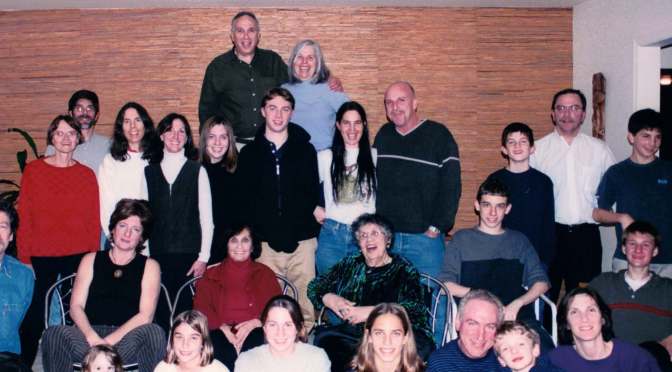
My birthday, November 26th, always falls sometime on the Thanksgiving weekend and everyone came home no matter where they lived. When I was sixty, my children made me a surprise birthday party. I can still feel how stunned I was at one Thanksgiving when I opened the card to find the picture of a computer. What I appreciated was their image of me. So many of the people I know are snow birds, or blue birds, or goofy birds. But my children think of me as this busy person uncovering new worlds via the internet and wide world web which is a gift in itself.
Another time, my family gave me an expensive music system. My family surprised me with a party when I was sixty, gave me a new computer when I was seventy, and a music system when I was seventy-five. I could hardly wait for what I would get when I became eighty. Perhaps they would think of a new car, an airplane, who knows what.
On April 15th, 2021, Boston celebrated the 73rd anniversary of the Israeli Independence Day by lighting up a bridge in Boston with blue and white lights, the national colors of Israel. Hundreds turn out every year for the celebration.
After this generation dies, who will remember the atrocities of the period in history that led up to the Independence? Or will the impact of these atrocities remain forever? Have we learned anything about avoiding such horrors? Who knows?
Here, I share some of what I remember about the 1940s when America was at war.
America was at war. Terrible things were happening in the 1940’s. Pearl Harbor was bombed by the Japanese. Young men were drafted and many died. Jews were being killed by the thousands, really millions, in Europe. Gays and lesbians were also incarcerated. The Japanese were storming the South Pacific. There was rationing of some foods, I don’t remember which ones. Gas was also rationed. In schools, children were practicing what to do in case of an air-raid. Nazis from Germany invaded Russia, then called the Soviet Union, and many were killed in combat. They did not anticipate what a Russian winter was like.
I was fourteen when the war started, but it went on for several years. At that time, I belonged to a group of young men and women, we called ourselves The Debites, after Eugene Debs, a famous socialist. All the boys were drafted into a branch of the American military. I still remember our anguish when we found out that Robert had been killed. He was our leader and so handsome. How could a young man who had a life of such promise be killed in his twenties.
There was all the news about Jews in Europe being sent to concentration camps. In my family, it was a constant topic of conversation. We are Jewish, and lived in a Jewish neighborhood in the Bronx.
I remember my father signing some document so a particular family could come to America. He signed many of them. Someone asked him, “Can you really take care of all these people?”
“They can take care of themselves, they just need to get out of Germany,” he said. “But, if they need help, I will find a way.”
This was another side of my father that I never knew before. He was in the sausage casings business and together, he and I, sent fourteen small salamis to men we knew overseas. We did not know if they would get them. And my father assured me they would be edible even though they travelled so many miles, by ship, overseas. All the years of the war, we did the same thing, wrapping and sending a salami to every address we could find.
When a friend of our family, Gene Schneider, came home, he thanked us for the salamis, and said “everyone loved them, we were so tired of military food, and they were always eaten in fifteen minutes. We were so far away from home, but the salami, more than just food, reminded us that there was still such a place as the United States with good things to eat.” Gene was eighteen when he went to New Guinea, he was stationed there for four years. We never heard of New Guinea until the war.
Many of the Jewish people I knew came to the U.S. in the early years of the 19th century. I don’t know why all my grandparents came, but my mother’s father came because he was going to be conscripted into the Russian army where Jews never knew how long they would be forced to serve. For my grandfather, it meant forever. He left Russia with a different name to avoid arrest.
All these Jewish people, some I knew, and some I didn’t, were in anguish about what was happening to the Jewish people in Europe. They came from different countries and for different reasons, but they understood anti-Semitism no matter the country or the form it took.
Franklin Roosevelt was almost a God in the Jewish community in which we lived. The question of why Roosevelt did not accept the Jews and the ship, the St. Louis, has always been an open question and much has been written about it. They were not accepted in any country, returned to Europe, where they were all killed.
We lived in a two-family house. One day, a few years later, there was this loud wail on the stairs coming from the second floor. Mrs. Alexander was coming down the stairs to tell my mother “Roosevelt just died.” Our community was in mourning. There are no answers to some things that happen in life.
Divorce is just the end of one story. What matters more is what happens next.
When I was 37 my husband asked me for a divorce. I had three children Marian, nine, Stephen eight, and Beth, three, and no money. I was frightened as I had never been before, frightened about what I had to do, living in a big wonderful house with my children, a house that needed repairs in a million places, paying the bills, single parenting, and probably needing to find work.
In those days, divorce was like a jungle with fears of the unknown, sudden and unexpected dangers, predatory animals, issues of survival and the treatment of lawyers and judges, all male, with their smart suits, briefcases, and indifference to your fears and concerns about money. But, I had no choice and slowly became reconciled to the idea. With attorneys, we negotiated the terms of the settlement for more than a year.
The divorce negotiations were so intense and troubling for me that I finally lost any positive feelings for Charly. I found out much later that he and a friend were in a relationship and that after the divorce they would marry. Two couples and six children had been displaced literally and emotionally. And Charly was trying to minimize the child support payments. That startled me most of all.
The next step was to actually get the divorce.
At that time, the only cause for divorce in New York was adultery and the only two places available for me were Nevada or Juarez, Mexico. I couldn’t go to Nevada which had a six-week residency so I flew to Juarez.
I met my lawyer and we went together to court. Everything was in Spanish. The only things I understood were the words Senora Rhoada Wald. I took the divorce papers home and wondered if they meant anything, whether they were really legal. I still have them and no one has looked at them since.
For me, the trip to Juarez was a new experience, flying to a foreign city and hearing a different language. I came home with a sense of freedom, freedom that the divorce process was finally over, after a year of negotiating, and freedom to make decisions for my children and for me. The world is a big place, could we, my family and I, explore some of it?
I told my children that the world could be an adventure and we should try to see what it was all about. When summer came around, I wondered what could we do for a vacation? We needed to get away, be together, have some fun, and put the terrors of the divorce phase-out of our minds. The only thing I thought we could afford was to go camping. When I asked friends and neighbors if they had any camping equipment we could borrow, the response was usually, “Are you crazy, you have never been camping before.” True, but what else could I do with three children and no money?
Photo by Photo by James Wheeler
I called several places that rented camping equipment, “Do you have a tent that an eight-year-old boy could put up?” Finally, one owner replied, “Bring him over lady, we will find one.” And so we began. Friends loaned us some sleeping bags, I took a few pots, we packed what we thought we might need, and began what was to become a 1200 mile trip lasting almost a month.
There were, of course, some mishaps. One day during our first week, we were at a new campsite, I was sitting and reading and the children were playing. “This is easy,” I thought. But I happened to have the trunk of my car open, with my purse in it and the keys to the car were in my purse. My daughter, Marian, came along and closed the trunk. Oh no! After some anxiety about how to deal with the problem, I asked a neighboring camper for some help. He took out the back seats and climbed through the trunk to retrieve my purse. I never knew that back seats could come out. This fellow-camper was so generous with his time, his know-how, and his sense of how to help and reassure us.
One night in Maine, just near the Canadian border, it was raining hard and Stephen was coordinating the raising of the tent and leading Marian and Beth in ways to help. Several men were watching and to my astonishment, no one offered to help. Up to then, we had met so many generous and friendly people. What a contrast this experience was with the man who helped me get my purse out of the locked trunk! After we got into the tent, I told them “tomorrow we are going to sleep in a motel.” I could hear their sigh of relief and delight. It was cold that night in the tent in the rain.
We traveled all through upper New York State, to places my children had learned about in social studies. We ended up in the Thousand Islands and came back down the east coast to Tanglewood and finally home. My family and I loved the trip but I did miss another adult to talk to.
At home, the memories of the trip sustained us for a long time. I realized that I did not have to listen to people suggesting I could not do something. The possibilities were endless and I could make up my own mind about what I could and could not do. The trip gave me the confidence to know that I could deal with the aftermath of divorce. A woman alone with three small children could go on a three-week trek. We were responsible and able.
The divorce was also difficult for my children. They, too, were in mourning but the trip nurtured our feelings of togetherness. We were a family, a different kind of family, a family who together had experienced the ups and downs of parental discontents and a vacation journey.
I was brought up to believe that I had to be married but this trip helped me understand that, if need be, I could do it alone. My strength and resourcefulness had never been tested before. But the ups and downs of camping, combined with being the sole parent, helped me validate the strength and ability to take responsibility, responsibility of all kinds.
My children also grew. Watching an eight-year-old boy, Stephen, telling his siblings what to do in the rain, was a picture of cooperation and leadership. Marian and Beth helped with so many things and took responsibility for cleaning up the campsite when we were leaving. They were working together, a joy for any parent
The trip turned out to be much more than a vacation. The divorce was the nightmare that changed my life and who I am. Our journey together brought me the ability to think for myself and to trust my own abilities. I didn’t have to buy the myths of what I could or couldn’t do. I now had the confidence to make those decisions myself.
“Without a wound, there is no author,” wrote Amos Oz, the famous Israeli author. I would paraphrase it with “Without a wound, there is no wisdom.” For me, wisdom evolves from crisis. I wasn’t a failure because my husband wanted a divorce. Crisis reinforces the idea that life matters, that you can conquer the problems, you can believe in yourself, you can move to the next more complex step, and you can explore the magic and mystery of life. For me, that is the journey to wisdom.
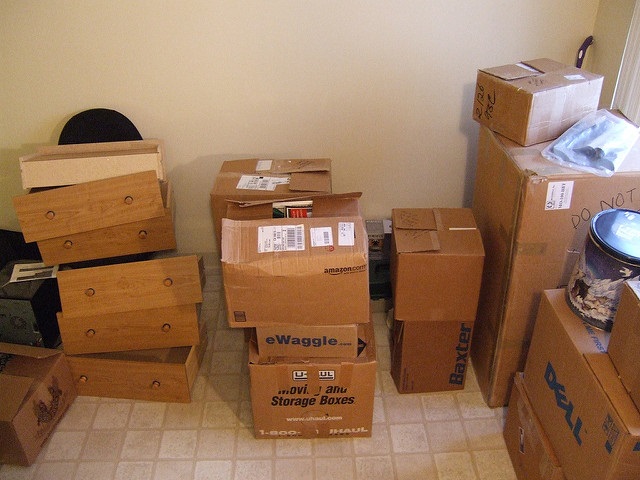
I sat there in the middle of boxes, big ones, small ones and ones too heavy to move. I couldn’t find the dining room table anymore and, as I looked around that morning, in 1998, about sixteen years ago, I had this terrible sinking feeling. What was I doing? I was in the throes of two major transitions, retiring from my academic position and relocating to Boston.
I am a born and bred New Yorker and lived there most of my life, except during the early stages of my marriage and when I worked abroad. but the retirement incentive was too good to reject and my three children, their families, and six grandchildren lived in Boston, a rare coincidence when so many families are dispersed all over the country. The combination of retirement and moving seemed logical, rational, and timely. That didn’t, however, make it easy.
I was doing this alone. divorce had been the major crisis of my life, but then there were three young children and I had to learn to take care of everything that needed to be done. Now, after so many years in a wonderful career, my academic life was a solid part of my identity, an identity I cherished. Separating from work was difficult, and I had just ended a ten-year relationship.
There was the sadness at the thought of leaving life-long friends, friends I’d had since I was young, friends whose children went to nursery school with mine. We were an extended family watching our own children grow, marry and have children of their own. And the communities I belonged to, the Reconstruction Synagogue of the North Shore and Rabbi Lee Friedlander — his voice and support were a part of my life.
And how would my children feel about me living so close to them? I thought they would be delighted if I was careful about not imposing, but who can be sure of anything?
…
As I look back, there have been life satisfactions and success–at work, in my love life, with friends and family. But there have also been disappointments. I never remarried, although I would have if the right person came along. There were disappointments at work too. In the last analysis, though, I am resilient whatever the issues, I always take the next step, like the move to Boston.
At the same time, I am reminded of my own mortality — sickness and death are around the corner. It is sobering, baffling, and difficult. Illness and death are also reinforcements that life matters, that each day is important and one must make the most of the moment, physically, intellectually, and emotionally.
These last years have been productive, interesting and fun. I do feel, though, that I shall always be somewhat of a stranger in Boston. My New York accent betrays me, and none of my history is here. My history is someplace back in New York, in the houses and apartments of my youth, my marriage, my single-parent period, my life with past lovers and my career. And, as I said before, “I am still a Yankee fan.” But Boston is where I live now, and it is almost home. And living close to family is icing on the cake.
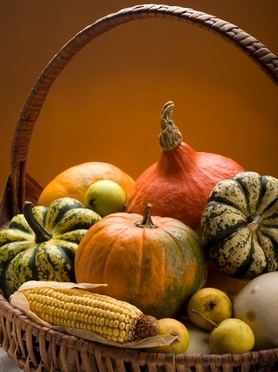
Thanksgiving is a special time to remember all the good things in our lives. Not that we shouldn’t do that all the time, but this is a time to do it together. I wrote this some time ago, but it still applies today.
Whatever you are doing in this season, I hope you are able to enjoy the blessings around you.
Thanksgiving
I feast my eyes on the children
my children
grown, beautiful
building an order to their lives.
My eldest getting married
to a wonderful young man
Another in law school,
not quite together yet about his life,
his vocation, his love,
But together in his head, his vitality
his assessment of things.
And the youngest
when did she get so lovely,
so tall, so slim
so elegant,
getting off the train
hugging her brother.
I feast my eyes on my nieces and nephews
growing up, getting taller
building an order to their lives.
Carrying the chairs, setting the table,
laughing as I torture the turkey
I feast my eyes on the richness of the harvest,
of young people
having birthdays, arguing about politics,
growing older, entering adulthood.
I feast my eyes on the miracle of it all.
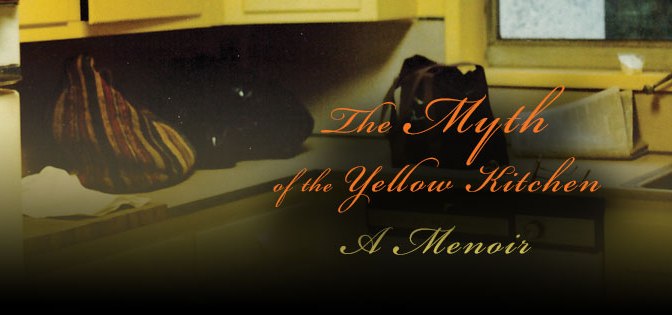
This poem was reprinted from The Myth of the Yellow Kitchen, a memoir about resilience in the face of life’s challenges.
Sisters know each other in a way that no one else can. At least that’s how it was with my sister, Milly. She was a special person. Independent, strong and caring. I wrote a special tribute to her in the Myth of the Yellow Kitchen. She also had special insights about me, apparently. She even wrote a poem about me. Maybe those who know me will recognize the person she wrote about?
I’ve been working on my ethical will lately. This is something that has nothing to do with money. It’s far more important.
An ethical will is your legacy. It incorporates what you’ve learned over your life and the values that you’ve cultivated that you want to pass on to your children and their children. Basically, it’s to bequeath an account of the values and ideas closest to one’s heart.














 Rhoada Wald