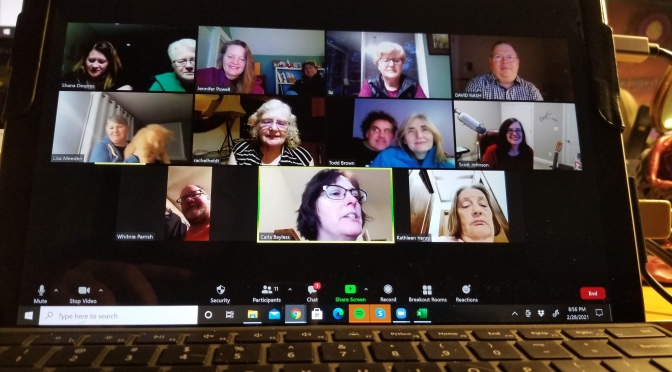
How do you release a book in a pandemic when everyone has to stay socially distant? On Zoom, of course! People want to stay connected so we connect on video.
It’s just amazing to me to see what we can do. And here I am, keeping up with all this technology.
I recently did an interview with my editor, Jennifer Powell, and a poetry reading. It’s different than being with people, but hopefully it still has meaning for those who see it.
Now that restrictions are changing, hopefully we can get together more in person. But for now, take a look and hear more from the new book, The House Loved Us.
This was written a year ago. A lot has changed, but not as much as we had hoped, I think.
Today is April 1st. April fools day. Where did that come from? Is this a joke?
No, it’s not a joke. What’s funny about hundreds of thousands of people in hospitals, thousands dead? What’s funny about that? More people have died in the last few weeks than all the people who died in the World Trade Center bombing.
I have been holed up in my apartment now for nineteen days, alone, not seeing anyone, except when I go to the lobby to get food that was delivered and sometimes my mail. My mail has decreased in size and content–one or two envelopes, one with an advertisement and one, a bill. I haven’t gone out now for nineteen days, except for an occasional walk, so I don’t spend any money. And the doctors and dentists are all holed up in their own homes too so I don’t buy anything and I don’t see any doctors or dentists and I don’t have as many bills. That’s another joke.
What do I worry about? I am alone and that is not easy. But what is it like for couples or families locked up all together for who knows how long. One daughter’s business has gone crash. How will she and her husband deal with it? How can they help themselves? My grandson, Michael, lives and worked in Philadelphia. Now the business has folded, he is alone in Pennsylvania with no work and no family. Megan and Joe were to be married June 16th. That will be canceled, until next year. And they live in the hotbed of the crisis, Brooklyn, New York. She told me one thousand people live in their building when I asked about New York density.
And the same for Todd and Marissa my oldest grandson and his fiancée. They are all working at home and they never go out for anything.
Just for fun tonight Marian, Beth, John, and I had a four-way conference call. Marian and Beth are my daughters and John is Beth’s husband. We talked about everything, how we are, what we laugh at, what we see on television, what are we worried about. I have three children. They married and among them had six grandchildren, and we became a family of thirteen, including me. Three of them are now a couple, Justin is married to Jason, Megan is engaged to Joe, and Todd is engaged to Marissa. What started out as three plus me is now sixteen.
Isn’t that wonderful! We are a force, a group, a loving group and when the grandchildren have children we will be even more. More to be joyous and to think about during this “pandemic.”
What happened to me that is new? I talk more on the phone with my family, with people I have known for a long time, and with my brother. My home has become more than a home. It is a protective nest, a nest to bury my head in, to watch the news on a daily basis—or almost every hour. Sometimes I feel safe here. I hardly eat, I miss my ice-cream and I am losing weight. Why I am losing weight, I have no idea and I have to try and eat more, even without the ice-cream.
Some mornings I get up with extreme anxiety and I don’t know how to deal with it. Today I went out, I drove to the drugstore and waited outside for Monica to bring out my prescriptions. I never met Monica, but I couldn’t recognize her even if I knew her, she was wearing a mask, a gown, and gloves. How nice she was to leave her job, even for a few minutes, to do this for me. She said, “The pharmacy is very busy, I’ve never seen it so busy and I don’t know if we can do everything.”
This is the pandemic as they call it. It is also April Fool. When I grew up this first day in April was the day to plan and carry out all kinds of crazy jokes on family and friends. What a joke. Today, even April Fool is not funny.
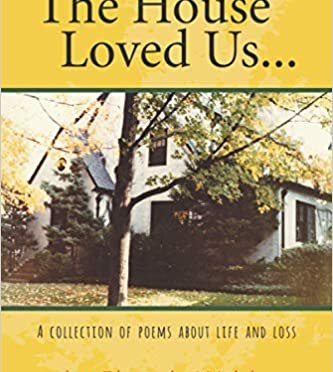
I am so excited to share that my newest book, a collection of poetry, is now available on Amazon. It has been a long journey with many twists and turns but here we are at last.
I began writing poetry the day before the closing of our house, the house we lived in for twenty-eight years. It was the place where I was happily married, my third child was born, and where I ended up with a painful divorce followed, thankfully, by increased diversity and satisfaction. These poems are about my journey and a reflection of the hardships and triumphs of those experiences.
My hope is that these poems will convey to you a mirror for your life as they did mine.
“Rhoada Wald, who has always been moving and growing with each experience life has presented, continues to be a lifelong learner and teacher as evidenced by this extraordinary collection of poetry. Each poem provides an astounding glimpse into a life spent questioning and searching for great meaning. The House Loved Us is filled with so much life, love, despair and hope that I find myself reading it again and again.” –Tom Martin
The blog post was written in March 2020 during a state-wide lockdown with residents being advised to remain in their homes except for necessary trips to the store or work due to a global pandemic.
Last week, I was home, not going out at all. The virus catastrophe was too difficult to deal with. Suddenly, I thought of jail. Out of the blue. Why? I have no idea.
I always wondered what it might be like to be in jail. In jail, in a cell with bars, where everyone could see me all the time, and see what I was doing. There would be no privacy.
Many years ago I saw what it’s like. My ex-husband was a psychologist and when he first got started, he had a fellowship in many of the institutions in New York State. I visited two, Elmira Penitentiary and Letchworth Village.
Elmira Penitentiary was a jail, a real jail. Once when I was visiting Charly in the town of Elmira, the prison had an open session for people to visit the jail. We were about twenty people in a pack, the way you might visit a museum in Paris or New York or Italy.
But this was no Paris. It was late afternoon, about five, still light out, and the men were all in their cells. I could read about it, mourn the idea, but never really felt what it meant until I saw men, maybe even boys, in their cells. Some were sitting and staring at us. What were we doing there, peering at them? I felt this throb in my heart, I didn’t know. One boy remains in my head forever. He was thin, about seventeen, wearing underwear with no sleeves, smoking, and bent over staring at us. I always wondered what he was there for and how long would he stay, what did he think of us. And how would he manage? How many years would he be in that cell with bars where everyone could see you?
I only knew one person in my life who had been in jail. Felix was a publisher and a communist. I once asked him how he became a communist. “From my mother’s milk,” he answered. He spent eighteen months in a federal penitentiary when Roosevelt made a deal to get communist Jews out of the Teamsters Union. He never would talk about it. But he became a prosperous publisher, married twice, and had three children, all of whom were totally messed up.
Letchworth Village is another story. It no longer exists. Children with all kinds of mental and physical disabilities were institutionalized there, sometimes for life. There is no need to describe what I saw, but it is enough to say, that in my lifetime, it was a nightmare and disgrace, it was written up in all the New York newspapers, and was demolished. What happened to the children? I do not know and cannot even imagine.
My son, Stephen once spent a year working in an institution for the retarded in Boston. His feelings for the children he took care of were in his voice, the movement of his face, sometimes even tears, as he talked about the work.
“What was so interesting and meaningful for me,” he once said, “is that some of these children could not and would never speak, but they always found ways to communicate.”
I know there are all kinds of jails. Domestic abuse is a prison, a prison with no visual bars, but bars just the same. Sometimes money or the lack of it is a jail. Where can you go and what can you do with just enough money and no hope for anything changing? There are jails all over, some with bars, some with mental bars that are just not visible.
For many years my marriage was great, Charly was building a career, and we had three children who were all healthy and wonderful. What happens when a marriage, once so sweet and gratifying, becomes a prison? Why? What happened? Visual bars are not there, but boundaries become clear and, for a while, impenetrable. Is there a sentence to marriage, how long is it for you and will you ever get out? I did not initiate the divorce, and it was very painful for me. Time and pain pass, and finally, you grow and learn and move away from that particular prison into the power of freedom. Then, I was free to acquire a doctorate and forge a career. The bars, visible or not, were eliminated.
I began this essay with the restraints of the Covid-19 virus. And it is still there and maybe for a very long time. I have been alone in my apartment for fourteen days. I am getting accustomed to the restrictions. They seem reasonable. My telephone is my salvation. I speak to people all over the world. The world crisis propels me to want to know how everyone is doing, my friend Deborah in Maryland, Elizabeth in California, Celina and Carol Lisa, in Israel and Don in New Jersey. My age tells me I am one of the most vulnerable age groups, and I must seclude myself. Can one live in a barred environment and still be free? For how long?
Sometimes I feel imprisoned by time, by life’s limits, imprisoned by my own decisions. Now, we are all experiencing a national virus. I am worried about the world, will we survive? I am anxious about my family, all secured in their respective homes. But three are in New York, the highest number of cases in the world. And Michael, my grandson, is alone in Philadelphia where the organization he worked for just shut down. What will he do in an apartment in Philadelphia with no work and no family?
I know I am free, free to break down the bars. I may not leave my home right now, but there are other bars that can be removed. Life offers choices. Can I move myself to the world of freedom even in this secluded space for an unknown time? Will I do it? Who knows? How?
Divorce is just the end of one story. What matters more is what happens next.
When I was 37 my husband asked me for a divorce. I had three children Marian, nine, Stephen eight, and Beth, three, and no money. I was frightened as I had never been before, frightened about what I had to do, living in a big wonderful house with my children, a house that needed repairs in a million places, paying the bills, single parenting, and probably needing to find work.
In those days, divorce was like a jungle with fears of the unknown, sudden and unexpected dangers, predatory animals, issues of survival and the treatment of lawyers and judges, all male, with their smart suits, briefcases, and indifference to your fears and concerns about money. But, I had no choice and slowly became reconciled to the idea. With attorneys, we negotiated the terms of the settlement for more than a year.
The divorce negotiations were so intense and troubling for me that I finally lost any positive feelings for Charly. I found out much later that he and a friend were in a relationship and that after the divorce they would marry. Two couples and six children had been displaced literally and emotionally. And Charly was trying to minimize the child support payments. That startled me most of all.
The next step was to actually get the divorce.
At that time, the only cause for divorce in New York was adultery and the only two places available for me were Nevada or Juarez, Mexico. I couldn’t go to Nevada which had a six-week residency so I flew to Juarez.
I met my lawyer and we went together to court. Everything was in Spanish. The only things I understood were the words Senora Rhoada Wald. I took the divorce papers home and wondered if they meant anything, whether they were really legal. I still have them and no one has looked at them since.
For me, the trip to Juarez was a new experience, flying to a foreign city and hearing a different language. I came home with a sense of freedom, freedom that the divorce process was finally over, after a year of negotiating, and freedom to make decisions for my children and for me. The world is a big place, could we, my family and I, explore some of it?
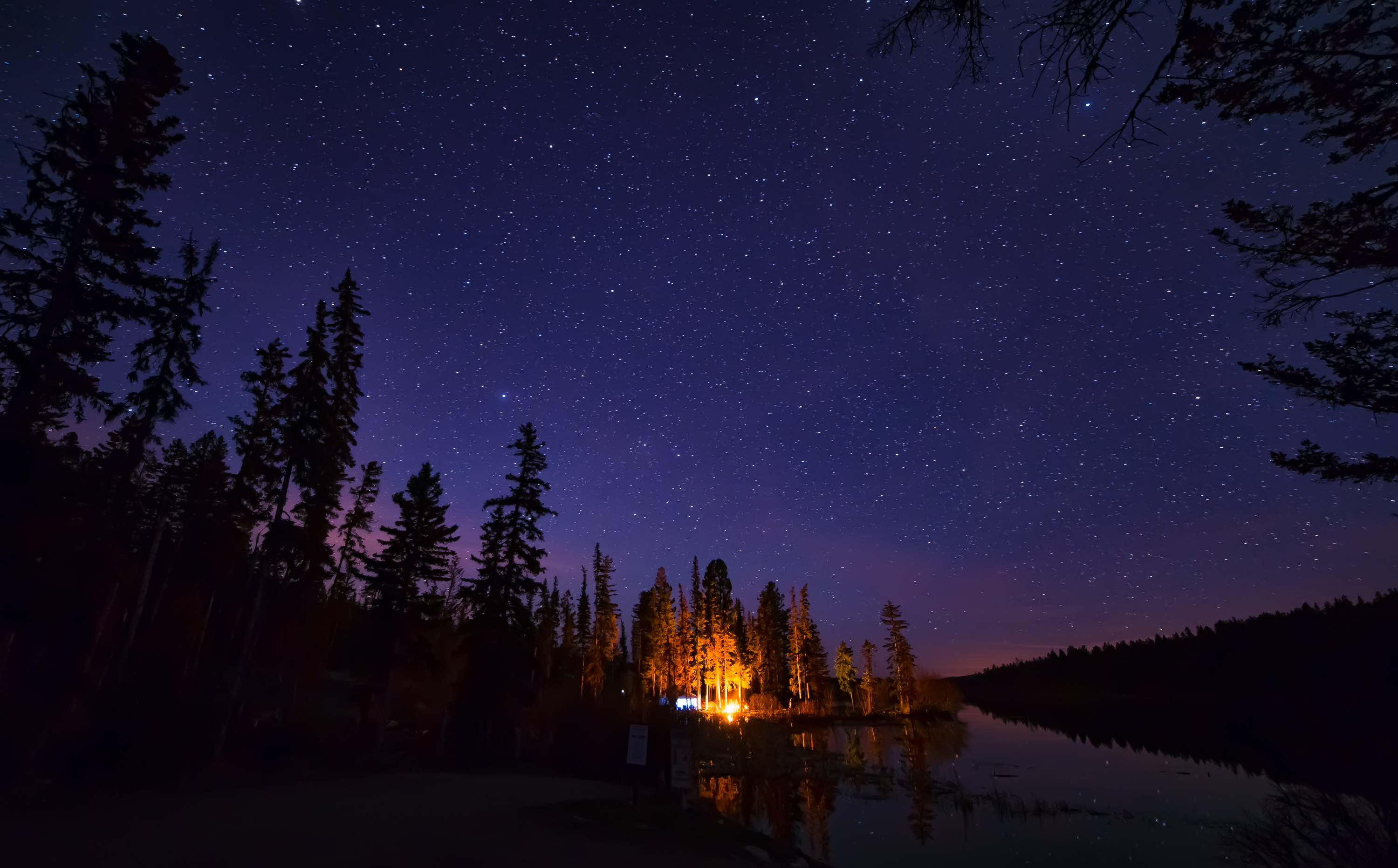
I told my children that the world could be an adventure and we should try to see what it was all about. When summer came around, I wondered what could we do for a vacation? We needed to get away, be together, have some fun, and put the terrors of the divorce phase-out of our minds. The only thing I thought we could afford was to go camping. When I asked friends and neighbors if they had any camping equipment we could borrow, the response was usually, “Are you crazy, you have never been camping before.” True, but what else could I do with three children and no money?
Photo by Photo by James Wheeler
I called several places that rented camping equipment, “Do you have a tent that an eight-year-old boy could put up?” Finally, one owner replied, “Bring him over lady, we will find one.” And so we began. Friends loaned us some sleeping bags, I took a few pots, we packed what we thought we might need, and began what was to become a 1200 mile trip lasting almost a month.
There were, of course, some mishaps. One day during our first week, we were at a new campsite, I was sitting and reading and the children were playing. “This is easy,” I thought. But I happened to have the trunk of my car open, with my purse in it and the keys to the car were in my purse. My daughter, Marian, came along and closed the trunk. Oh no! After some anxiety about how to deal with the problem, I asked a neighboring camper for some help. He took out the back seats and climbed through the trunk to retrieve my purse. I never knew that back seats could come out. This fellow-camper was so generous with his time, his know-how, and his sense of how to help and reassure us.
One night in Maine, just near the Canadian border, it was raining hard and Stephen was coordinating the raising of the tent and leading Marian and Beth in ways to help. Several men were watching and to my astonishment, no one offered to help. Up to then, we had met so many generous and friendly people. What a contrast this experience was with the man who helped me get my purse out of the locked trunk! After we got into the tent, I told them “tomorrow we are going to sleep in a motel.” I could hear their sigh of relief and delight. It was cold that night in the tent in the rain.
We traveled all through upper New York State, to places my children had learned about in social studies. We ended up in the Thousand Islands and came back down the east coast to Tanglewood and finally home. My family and I loved the trip but I did miss another adult to talk to.
At home, the memories of the trip sustained us for a long time. I realized that I did not have to listen to people suggesting I could not do something. The possibilities were endless and I could make up my own mind about what I could and could not do. The trip gave me the confidence to know that I could deal with the aftermath of divorce. A woman alone with three small children could go on a three-week trek. We were responsible and able.
The divorce was also difficult for my children. They, too, were in mourning but the trip nurtured our feelings of togetherness. We were a family, a different kind of family, a family who together had experienced the ups and downs of parental discontents and a vacation journey.
I was brought up to believe that I had to be married but this trip helped me understand that, if need be, I could do it alone. My strength and resourcefulness had never been tested before. But the ups and downs of camping, combined with being the sole parent, helped me validate the strength and ability to take responsibility, responsibility of all kinds.
My children also grew. Watching an eight-year-old boy, Stephen, telling his siblings what to do in the rain, was a picture of cooperation and leadership. Marian and Beth helped with so many things and took responsibility for cleaning up the campsite when we were leaving. They were working together, a joy for any parent
The trip turned out to be much more than a vacation. The divorce was the nightmare that changed my life and who I am. Our journey together brought me the ability to think for myself and to trust my own abilities. I didn’t have to buy the myths of what I could or couldn’t do. I now had the confidence to make those decisions myself.
“Without a wound, there is no author,” wrote Amos Oz, the famous Israeli author. I would paraphrase it with “Without a wound, there is no wisdom.” For me, wisdom evolves from crisis. I wasn’t a failure because my husband wanted a divorce. Crisis reinforces the idea that life matters, that you can conquer the problems, you can believe in yourself, you can move to the next more complex step, and you can explore the magic and mystery of life. For me, that is the journey to wisdom.
This is Epilogue 2 for my book. In your imagination, add it to the Myth of the Yellow Kitchen as another chapter about life, work, pleasure and complexity. Learning goes on forever—in seven days I learned about hardship, kindness, new cultures, the technology and magnitude of the Canal and something about the sea. I could go on and on, but take the trip yourself, and, don’t forget, read my book.
With some friends, I planned a trip in early January to Costa Rica and the Panama Canal, a recreational trip, a trip to get away from the bitter, January Boston weather. Boston was 2 degrees during the day and below zero at night. What a time to get away. I hadn’t been away for a long time and really forgotten what it was like to see new places, taste new foods, experience new cultures, and meet people. We live on a large planet and there are so many cultures and differences. On some level everyone is the same, they are born, grow up, marry, have children, work, and age. But different people do it in different ways. And that is intriguing.
The ship, The Variety Voyager, was small by general cruise standards with only seventy passengers, generally two to a cabin. This Greek vessel had almost everything you could want on a vacation including appetizing food, spotless, comfortable and beautifully appointed cabins, a gym, cheerful and helpful staff, and great trips on land.
People are Different and Yet the Same
We began in Costa Rica with one night at the magnificent Radisson Hotel. And then from the ship, we sampled the city of San Jose, the wonderful, pristine beaches, nature trails, animals, birds, fish, the special food of Costa Rica. On one unspoiled beach, we snorkeled in the calm, clear water. The staff provided barbecues, although how they do it is a mystery to me. How do they carry all that food and everything else that goes with a meal? Everywhere we met gentle and kind people.
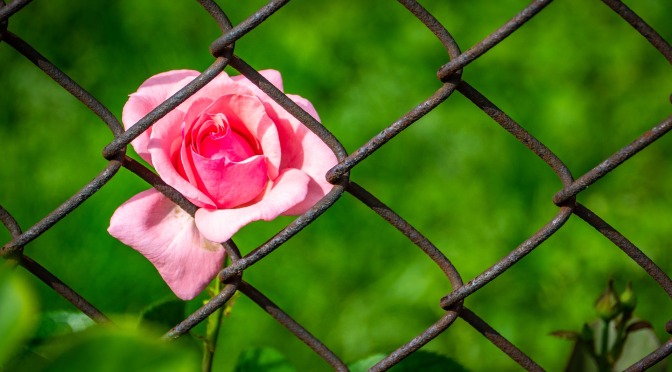
When I travel to a different culture I learn what is different, what is the same. Here in Costa Rica, there is no army, but people live in houses guarded by heavy chain link fences. When we got lost, a family asked us in. They gave us tea and told us how to get where we had intended to go. I was charmed by their hospitality. Would this happen in America? They are not afraid. But the chain link fence is strongly locked. Contradictions that I perceive and do not understand intrigue me.
Ingenuity of People Amazes
The nights were wondrous as the ship moved gently through the Pacific. On only two nights the ship rocked with the current and the waves. There was music at night by a wonderful staff member from Serbia who can play classical music, pop, jazz and a million songs that we sing together. Where did he learn this? He did not begin studying music until he was seventeen. The ingenuity of people amazes me. We, the Americans, are not wealthy but rich enough to be on this ship and have our children study music at an early age. I marvel at the staff, their lives are difficult, but they smile, are gracious and play the most wonderful music with joy and passion.
The Panama Canal
And then we reached what we all came for—The Panama Canal. It cost $17,000 for the ship to pass through it at night. We crowded the front deck as we watched the ship move through the four locks, pulled by small trucks called mules. Mules are what pulled the ships when the Canal was built in 1914. How did they do it then, there was no technology? The trip through the Canal takes eight hours and the hardy few of us stayed to see us go through the last lock at 1:30 a.m. How many times in school did I study the Panama Canal? But I never could imagine, its largesse, the man-made lakes that feed it, the work crews, the locks. Who were these people that envisioned this feat in 1914? So much to know and to learn.
A Diverse Staff
One night, the Captain Andreas Sifnotis told us about his life. He is Greek and met his wife when they were both young and working on a ship. The sea is his life. He explained nautical terms, what he is responsible for and what makes a ship go. He was telling us not just about the ship but about the layers of life, of pleasure and work. The staff comes from many places, Greece, Serbia, the Island of Mauritius, the Philippines, Indonesia and Egypt. Some come for the love of the sea, others for work. A few have not been home for years but send money home. The crew includes four young girls from Indonesia who arrived just a month ago. They are struggling to learn English but are always kind and helpful.
From Cruise Ship to Canoes
On the last day, we went by man-made wooden canoes to visit a tribe in the rain forest. The bus took two hours, the canoe ride through the rain forest another hour. Upon arrival, we were welcomed by twenty-eight families living in the rain forest, wearing loin clothes, dyes and tattoos. The women do not cover their breasts. They live on dirt. I wonder how come there is no grass here in the middle of the rain forest. We eat fish they have caught and some herb they have grown wrapped in a coconut leaf. They dance to homemade instruments. Their arts are all around us, for sale, ranging in price from $10.00 to over $500.00. And here is yet another contradiction. These are seemingly primitive people but they know about money and American dollars.
(Written during the record-breaking winter of 2015)
The Snow is Falling and Falling and Falling
Will it Ever Stop?…..
I remember the winter the snow was falling and falling and falling. I sat there at my window and remembered those few days. It snowed yesterday, it is snowing today and the news reports tell us it will be snowing, not tomorrow, but the day after tomorrow. And on and on. The snow is piled high and in some places, you cannot see behind the corner. Mountains of snow are everywhere.
I live in an apartment building and my car is in an underground garage. This is the first garage I have ever had. My old and wonderful house had a garage but it was way in the back and too far to shovel. We left the car on the edge of the sidewalk, to shovel as little as possible. Besides the garage was just a convenient place to store things like lawnmowers, barbecue devices, bicycles, and anything else we did not know where it should go. It was a potpourri of things we used and things we never did.
What did I know? I didn’t know that you had to take care of a garage the way you take care of a house, so by the time I decided to sell the house, I took down the garage, it was falling apart and would not add to the sale, probably just the opposite, it would turn possible buyers away.
So here I am now, in Boston, in a city that is making history. The snow is making records and maybe there is more to come. And the news tells us, that again tomorrow there will be snow and then icy rain. How do the people in Alaska live, or Nova Scotia? How do they keep warm, get around, get food, go to work. Here in Boston, the rail system has stopped working several times and people can’t get to work.
But for the moment, it is white, it is clean looking and there is beauty to the whiteness. How will this all melt? And what will happen when it does Huge puddles will be everywhere. Stay tuned to hear more, and by the way—Did you read my book yet? It is a great read for a snowy or rainy day. Just sit in front of the window, watch the snow falling and read The Myth of the Yellow Kitchen.
The holidays can be “the best of times and the worst of times.” Why? Let me explain. We just finished Chanukah and next comes Christmas and New Years, all three holidays representing the best and worst of times.
Chanukah
When I was a child, my grandfather would give us ten cents for Chanukah, that is all I remember. As an adult with my own children, life had definitely changed. Advertising had become an overwhelming part of everyday existence and the challenge for Jewish parents was to help their children cherish Chanukah and ignore Christmas. Did we succeed? I don’t think so.
All my children intermarried and again I thought my responsibility was to help my grandchildren feel close to Chanukah and Jewish life. So every year I brought a menorah for each family, candles for the eight days of celebration, and Chanukah gelt (chocolate money coins). Did it work? I have no idea because Christmas was an important holiday in each home.
Christmas
I remember the first time I went to my daughter’s house and saw the huge Christmas tree, decorated beautifully with presents all around it. My heart beat so fast, I had to sit down. I never said a word and for all the years following I saw the Christmas tree in each of my three children’s homes. After time, my heart beat normally, and I did not have to catch my breath. I also gave and received beautiful presents, it was fun and I was with family.
But I never looked directly at those Christmas trees.
New Year’s Eve
New Year’s Eve can be fun or a disaster. As a single person, I always wondered what would I be doing and with whom. It was no problem when I was involved with one of the men in my life. But alone, it could be heart wrenching. Once I went out to dinner with a friend, she liked to eat early, but I was home by 9. Is this the way to spend New Years, she was furious when I would not do that in subsequent years. Another time, I was home alone, saw a good movie on television, had a glass or two of wine, and went to bed early. But it didn’t work. I felt alone, very alone. This year I am going out with friends, close friends, for a late dinner at a quiet hotel with soft music in the background.
It should be fine, probably not the best of times, but definitely not the worst.










 Rhoada Wald