Thanksgiving at my Table

ThanksgivingThanksgiving is a special time to remember all the good things in our lives. Not that we shouldn’t do that all the time, but this is a time to do it together. I wrote this some time ago, but it still applies today.

Whatever you are doing in this season, I hope you are able to enjoy the blessings around you.

Thanksgiving

I feast my eyes on the children
my children
grown, beautiful
building an order to their lives.

My eldest getting married
to a wonderful young man
Another in law school,
not quite together yet about his life,
his vocation, his love,
But together in his head, his vitality
his assessment of things.

And the youngest
when did she get so lovely,
so tall, so slim
so elegant,
getting off the train
hugging her brother.

I feast my eyes on my nieces and nephews
growing up, getting taller
building an order to their lives.
Carrying the chairs, setting the table,
laughing as I torture the turkey

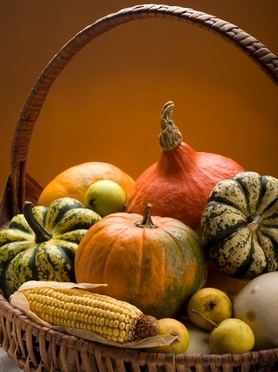
I feast my eyes on the richness of the harvest,
of young people
having birthdays, arguing about politics,
growing older, entering adulthood.
I feast my eyes on the miracle of it all.

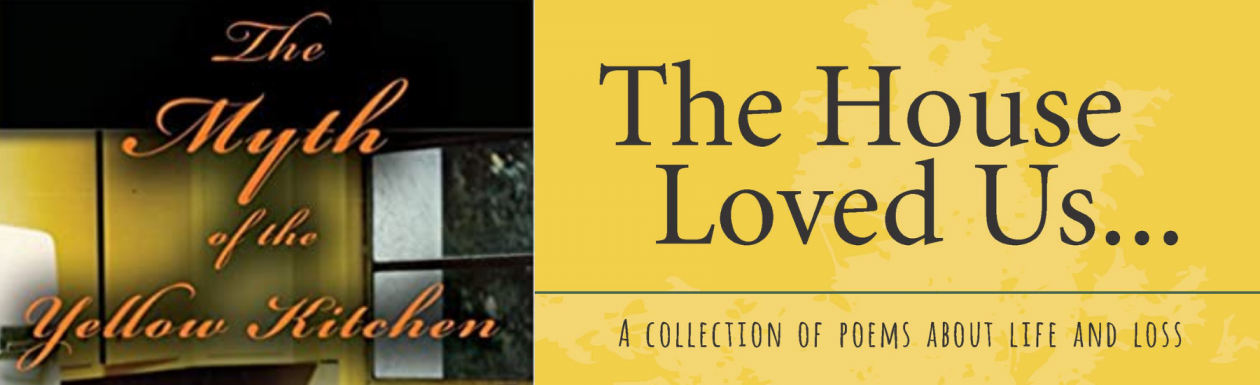
This poem was reprinted from The Myth of the Yellow Kitchen, a memoir about resilience in the face of life’s challenges.


Looking for a Thought Provoking Book for Your Book Club?

The Myth of the Yellow Kitchen explores the unexpected challenges life throws at us and how to we respond to them.
I wrote this book to show that you can not only survive but thrive through adversity. It’s an intimate look at the complicated sometimes troubled relationships we have to navigate and an insight into the victories we can create.
 This book can be used as a jumping off point for book club discussions on what life sends our way and how we respond. It’s a slice of real life intended to be both thought-provoking and inspirational.

Continue reading Looking for a Thought Provoking Book for Your Book Club?

Life and Death — Living with Mortality

Today, I went to a memorial service for a friend.  He was eighty-five, lived a wonderful life as a doctor and had three grown and exceptional children, all of whom spoke at the service.  His wife, also a physician, spoke too, of their sixty-two years together, his humor, his caring, his interests and their marriage.meleah-s-birthday-cake-1325964-638x479_edited

Tomorrow, Sunday, I am going to the birthday party of a friend, he is seventy-five.  Continue reading Life and Death — Living with Mortality

A Sister’s Tribute

sisterSisters know each other in a way that no one else can. At least that’s how it was with my sister, Milly. She was a special person. Independent, strong and caring. I wrote a special tribute to her in the Myth of the Yellow Kitchen. She also had special insights about me, apparently. She even wrote a poem about me. Maybe those who know me will recognize the person she wrote about?

Ode to Rhoada

Sanibel Island, 2005

by Milly Kapilow

All hail my awesome sister Rhoada

Build for her a sacred pagoda Continue reading A Sister’s Tribute

An Ethical Will to Pass Along My Greatest Riches


Rhoada Wald with her children at a dance recital.

I’ve been working on my ethical will lately. This is something that has nothing to do with money. It’s far more important.

An ethical will is your legacy. It incorporates what you’ve learned over your life and the values that you’ve cultivated that you want to pass on to your children and their children. Basically, it’s to bequeath an account of the values and ideas closest to one’s heart.

For me, I want to pass on a love of learning. Continue reading An Ethical Will to Pass Along My Greatest Riches

Worry

An Extract from The Myth of the Yellow Kitchen

Today we are having an “almost” blizzard. The snow began falling last night and the reports indicate that we may have up to twenty inches of snow by tomorrow. My son needed to fly home from California, and scheduled a flight for today. When I heard the weather report, I began to worry how he would get home. Fortunately, he changed to a flight last night and arrived this morning, but with a fever of 102 degrees. So I am still worried. Why didn’t he take the flu shot? If the fever turns into pneumonia, it would be his second bout in five years.

No wonder I worry.

My oldest grandson came home last night because his girlfriend’s father is suddenly in the hospital. How will he get back to school for his finals? He didn’t bring boots, will he catch pneumonia? His brother, Justin, stayed overnight with a friend from school. Marian, my daughter and his mother, drove to Hamilton to pick him up. That is the area which, so far, has the most snow, almost eight inches already. This causes me great worry.

At six in the morning, my other daughter, Beth, opened the health club she and her husband own. She is going to close the club at noon, but then how will she get home?

“Don’t worry Mom,” she says, “I know what I am doing, I have it all under control.”

And how come she is opening the club? What about him? I worry that I can’t help her. She is, after all, forty-five, and can take care of herself.

The woman upstairs is away, and her daughter left at 7:30 a.m. to take the SAT’s. How will she get home? She was wearing a skimpy jacket. Did she have boots? I couldn’t convince her that the test might be cancelled or repeated. I seem to worry about children everywhere, mine, my grandchildren, and other people’s.
Jonathan, my-fifteen-year-old grandson, has his second bout with strep throat in less than a month. Do I need to repeat how that worries me?

I read in the Boston Globe that people with H-Pylori can get stomach cancer. I had H-Pylori. Should I also worry about myself? Do I have time? Do I have the energy to worry about my own health?
When I am ninety and my children seventy, will I still worry? Probably. And I can’t give up my last worry. Is this writing any good? I have no way of knowing and worry that I don’t know.

The Passover Seder:  My Search for Freedom

Another year, another Seder—how many Seders have I led or gone to in my life.  Too many to trace with a number.  As I do every year, last Friday, I again had the pleasure and excitement of taking down my mother’s silver cups with her initials, and polishing them carefully.  Another year of setting the table with my best tablecloth, the symbolic Passover food, the special Seder plate, and my company dishes.  What Haggadah (the Passover ritual) shall I use?  I always come back to the one I wrote years ago.  Each year the Seder renews my own history, my own journey—where I started and where I am now.

When I was a child, I wasn’t exactly sure what Passover meant.  Every year I heard the same story; Moses freed the Jewish slaves and led them out of Egypt.  They roamed the desert for forty years, received the Ten Commandments and, finally, reached Israel.  The ancient Passover story meant freedom for the Jews, freedom to leave slavery, freedom to leave Egypt, freedom to find the Promised Land.

The Seder is literally a reenactment or story of the Jewish experience, the years of bondage in slavery, the search for freedom, the forty years of wandering to reach “the Promised Land.”  Today, I know it is a metaphor for freedom, but then I didn’t know where Egypt was or what was meant by the Promised Land.

My earliest memory is my grandfather leading the Seder.  He was a gentle man,  small in stature, with a soft voice.  He would read in Hebrew, from the Haggadah, the book describing ritual, the men sometimes joining, while everyone else, the women and children, sat around the table, waiting and listening.  But the meal was fun because it was family—cousins laughing and stealing the wine, everyone together, and eating different kinds of food.

Every year we heard the same themes—what is freedom, who is free?

After Charly and I were married, we had our own Seders.  As the woman of the house, I took on my mother’s role, shopping, cleaning, cooking, and getting the table ready.  My husband always led these Seders.  At our Seders we used children’s Haggadahs, the English translation was right there with the Hebrew and the children could understand the holiday.

My marriage began in full bloom, but slowly over time it felt quite barren.  Just as the Jewish people had been slaves, I had been captive in the notion of what my role was, what I had to do and how to do it.  What is freedom?  Who is free?  Free from what?  “Living happily ever after” was an unfulfilled promise.


The marriage ended, and I began a new journey, a journey sometimes frightening and, often, lonely.  Like the Jewish people wandering in the desert, I went out into the world with my children and wandered for a long time without a clear understanding of where I wanted to go or my final destination.  What was my Promised Land?  Eventually, my career evolved, I acquired a doctorate and was one of the first faculty members at a new experimental college.

After the divorce, I continued the Seders and over time, my own voice evolved depending on where I was in my life and what questions I had about freedom.  I led them and always ended with:  “What is freedom, who is enslaved, who is free?

For some of those Seders, Richard, my long-time lover, and I led them together.  All our children, his and mine, relatives, and friends came.  First, we invited ten people, then fifteen, once even twenty.  We were so proud, so steeped in promise.  Our Seders were contemporary, based on themes about the Holocaust, Anne Frank, poverty in America, Vietnam, and civil rights.  We always ended with: “What is freedom, who is enslaved, who is free?

Now, I write my own Haggadah.  The table is again set with all my beautiful things, my dishes, my mother’s silver, glasses collected from my travels, candlesticks from Sweden, my sister’s flowers.  I like tradition, I like the modern world.

Family and friends, children, and grandchildren read prayers and poetry, talk about their lives, their journeys, their own quests for freedom, the freedom of the Jews, the exodus of the Soviet Jews, each from our own Exodus, our particular bondage.

The years pass, and the Seders go on and on.  Each one is different and yet all the same.  We talk together about all the themes of the Passover Seder—modern plagues, Aids, poverty, war, violence, and the freedom and problems of living in a modern democracy, America.  We have reached the Promised Land, a land where freedom roams, the desert blooms, and my family thrives.

Each year we ask, “What is freedom, who is enslaved, who is free?”

I am here, this is my voice.

A longer version of this essay is in my book, The Myth of the Yellow Kitchen.
Identity

I always think I’m
not in the right place
at the right time
doing the right thing
whatever right is.

I always feel that I’m
not wearing the right clothes
no matter how many clothes I buy.
Sheila always seems
perfectly groomed,
informal for informality
tailored for such occasions,
wearing stockings while
I go bare-legged to the theater
feeling gross,
not dressed correctly
not in concert
with my age, status, or place in life.
so the next time
I wear stockings
and she looks perfect
in jeans
and a red shirt.

Lucy gets a job
selling insurance
and I think that’s the right thing
even though I hate selling
and hate insurance.
but for one long week
I read the business section
of the New York Times
thinking I should
apply for those jobs.
but I never do.

Letters to My Family